Tideour table · ±15 min
The lagoon fills and empties twice a day, about six hours between high water and low — on the moon’s clock, not ours.
See the week’s tidesTwice a day the sea walks out across the flats, and twice a day it comes back turquoise. Nobody in Paje plans against the tide — this page is how you plan with it.
Tide, wind and sky over the Paje lagoon — read off our own calibrated table and this hour’s forecast. The water edge on the map moves with the real one.
The lagoon fills and empties twice a day, about six hours between high water and low — on the moon’s clock, not ours.
See the week’s tidesUnguja — 85 km from tip to tip. The Nest is on the east coast, behind the reef that makes the lagoon; the wind you see crosses the whole island to get there.
Kusi, the south-easterly trade, runs the middle of the year; Kaskazi comes in from the north-east around the turn of the year.
The sun goes down close to six all year round — sundowner territory.
Tide from our own table, calibrated against the Zanzibar tide gauge (±15 min in 9 of 10 tides). Map traced from © OpenStreetMap contributors. All times East Africa Time. Weather data by the Norwegian Meteorological Institute (CC BY 4.0) — a forecast model, not a beach station.
Paje sits inside a reef lagoon: a wide, almost perfectly flat shelf of sand between the beach and the barrier reef you can see breaking white on the horizon. When the ocean eases towards low water, that shelf simply runs dry. A small drop in sea level moves the shoreline hundreds of metres — which is why the sea here doesn't retreat so much as walk away.
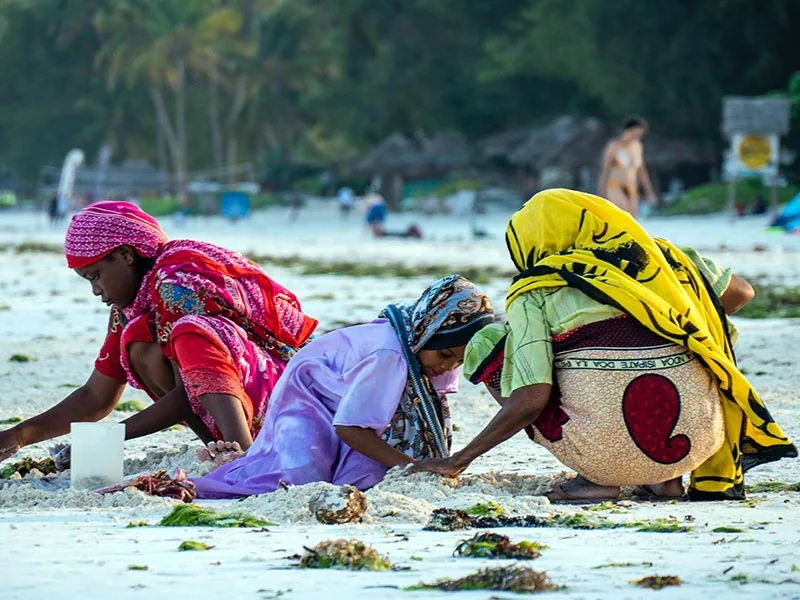
What it leaves behind is a second landscape: rippled sandbanks, warm pools, the village seaweed gardens suddenly at your feet, and a horizon of people out on the flats going about their morning. Six hours later the whole picture is under water again.
High water is the Paje of the postcards: the lagoon filled to swimming depth, boats floating on their moorings again, the beach narrowed to a bright ribbon. The light does something particular over flooded white sand — the whole bay switches on.
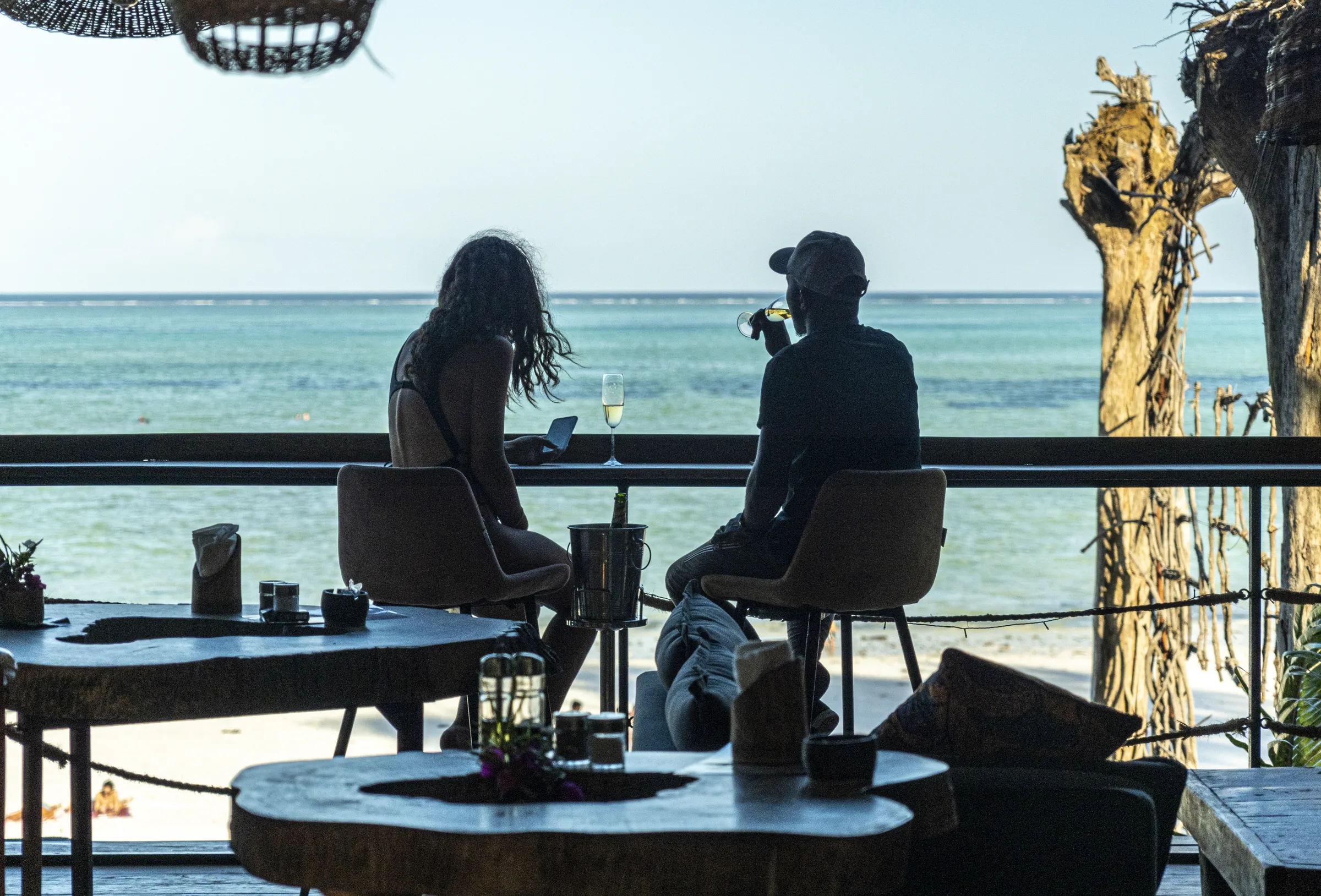
If you only ever see one tide, you only ever meet half the place. The trick is not to fight the rhythm but to use it: the sea sets the hours, you choose what to pour into them — and the rail of the beach bar is front row for the whole change of scene.
Every day serves all four, in order. The times move — the menu doesn't.
The flats open for business: walk out across the ripples, poke around the tide pools, watch the seaweed farmers tend their gardens.
Know the time of the turn before you set out — the water comes back faster than it looks.
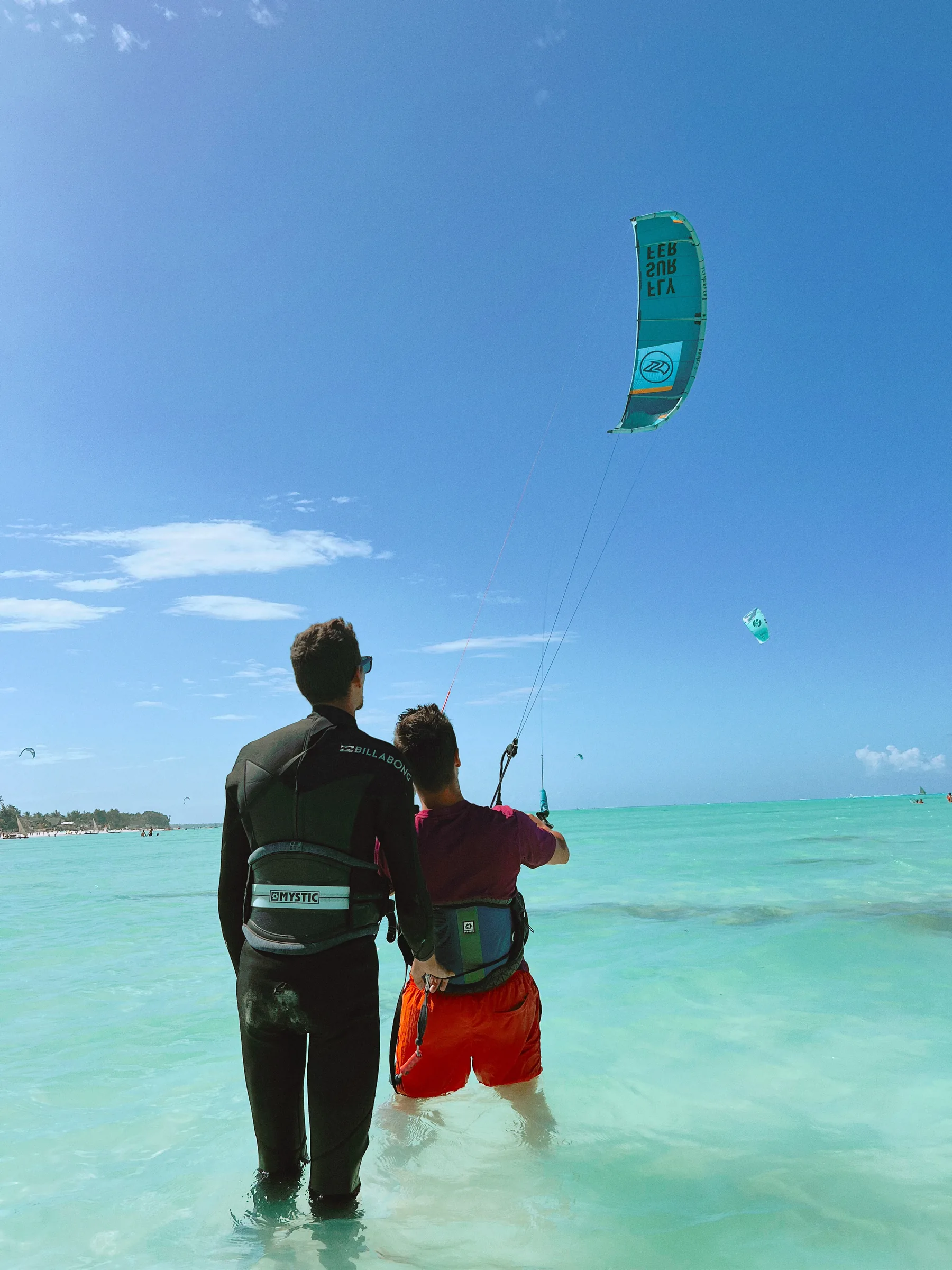
Flat, shallow water sliding in over warm sand — the window riders wait for, and the reason this lagoon is famous.
The lagoon at swimming depth, boats leaving for the reef, the classic turquoise everywhere you point a camera. This is the window for being in the water rather than on it.
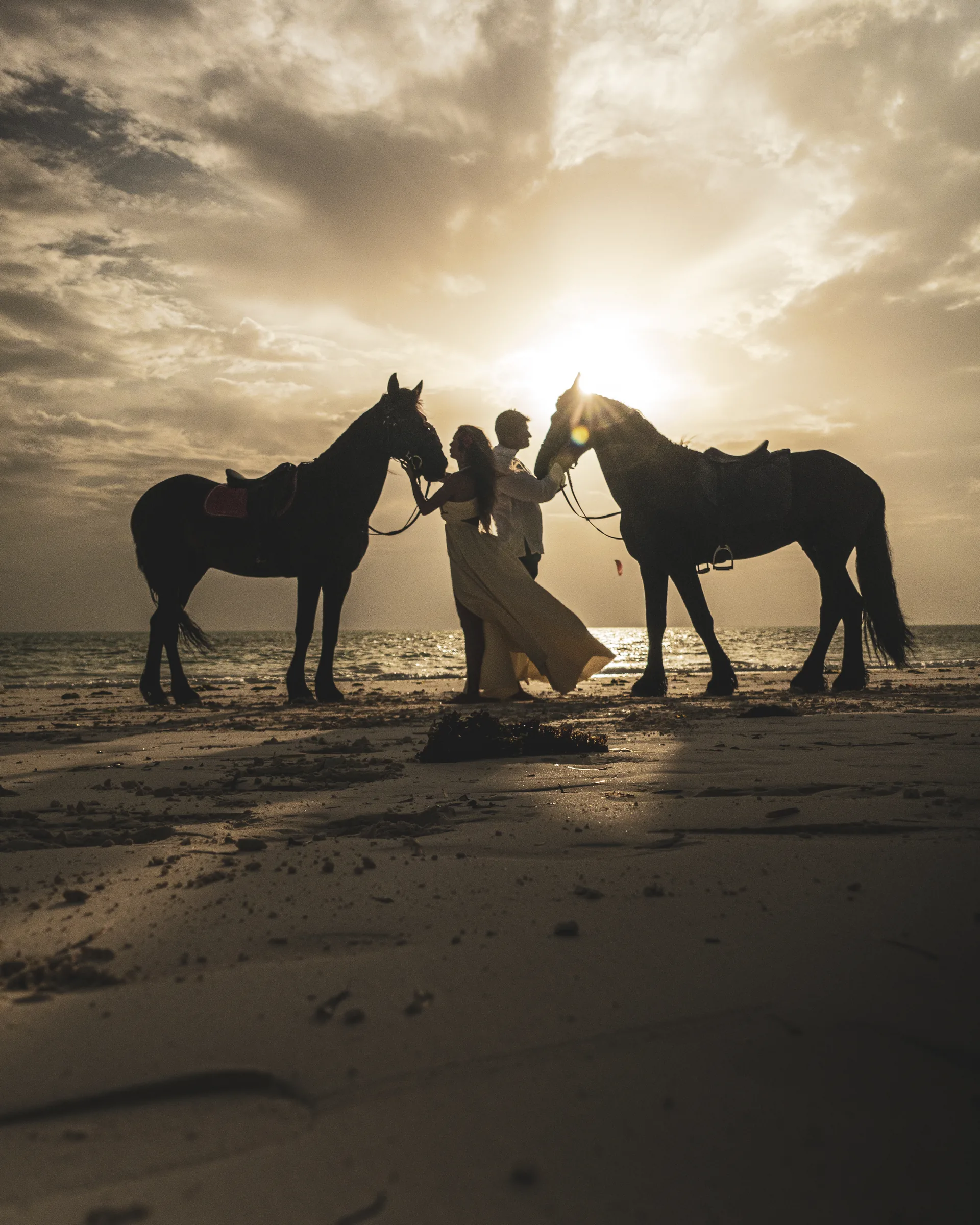
The sea starts its long walk out, fishermen follow it, the light stretches. The quietest, most photogenic hours on the beach — sundowner territory.
Look for Paje tide times online and you'll find numbers that disagree with each other. We'd rather publish one table that is right, so we built ours: an open ocean-tide model, calibrated event by event against seven thousand tides recorded by the Zanzibar tide gauge — and the error margin printed underneath, where you can see it.
Those are the hours. If you'd rather not do the arithmetic, we'll shape the day around them — the walk on the flats, the kite session, the swim, the sundowner. Plan your days →
Twice a month, at full moon and new moon, sun and moon pull in line: highs ride higher, lows fall lower, the flats open at their widest and the water moves with real intent at the turn. Those are spring tides. Around the quarter moons the pull works against itself and everything relaxes — neaps: smaller range, lazier currents. The chart above marks them.
The whole schedule slips about fifty minutes later every day, because the tide keeps the moon's clock, not ours. That is why the chart runs for a week instead of for today — and why yesterday's perfect hour is today's wrong one.
Rule of thumb: never plan by memory — know the time of the turn before you walk out.
The famous flat water of Paje is a tide event, not a permanent condition. On the low-to-mid window the lagoon is a waist-deep mirror where falling costs nothing; towards high water the swell reaches the reef and the wave riders get their turn.
That is why wind and tide are read together here: the forecast tells you if, the tide chart tells you when. The kite pages carry the wind month by month — this page carries the other half of the equation.
Paje sits inside a reef lagoon: a wide, almost flat shelf of sand between the beach and the barrier reef. When the ocean drops towards low water, that shelf runs dry — a small fall in sea level moves the shoreline hundreds of metres. The water is not gone; it is waiting on the other side of the flats.
The water sits near its lowest for roughly a couple of hours around the printed time, and it is about six hours from high water to low. The whole cycle repeats twice a day, roughly fifty minutes later each day.
Not really — that is the honest answer. At low water the lagoon is ankle-to-knee deep, with warm pools left behind in the sand. Swimming, and the classic turquoise postcard, come back with the rising water; high tide is the swimming window.
People walk the flats every day — the village seaweed farmers work out there on every low water. Borrow their common sense: know the time of the turn before you set out, keep a margin to walk back, and remember the water returns across very flat sand, so it moves faster than it looks. When in doubt, ask us for the day's times.
Riders love the low-to-mid window for butter-flat water over standing depth; near high water the swell reaches the reef and opens the wave riding. Wind and tide together decide the session — the wind side lives on the kitesurf pages.
Around full moon and new moon — spring tides — the highs are higher and the lows are lower, so the flats open widest and the currents at the turn run strongest. Around the quarter moons — neap tides — everything is gentler.
Put the tide in your plan.
Tours, dinners, lessons — pick what you fancy and we come back with one quote, timed to the water. Nothing is booked here.
The rest of the island — seasons, villages, and the trips worth leaving the beach for.
See the island guide